

Overview Table
| Category | Details |
|---|---|
| Full Name | Abhishek Sharma |
| Nationality | Indian |
| Primary Role | Top-Order Left-Hand Batter |
| Secondary Role | Left-Arm Orthodox Bowler |
| Playing Style | Aggressive, Fearless, High-Tempo Scoring |
| Key Formats | T20, List-A, Domestic Cricket |
| Known For | Powerplay Impact, Clean Hitting, Strike-Rate Acceleration |
| Strengths | Ball-Striking, Back-Foot Play, Intent Clarity, Tactical Awareness |
| Key Traits | Calm Temperament, Adaptive Mindset, Modern White-Ball Identity |
| Long-Term Potential | Multi-Format Batting Asset For India, Powerplay Specialist |
Introduction
Abhishek Sharma is a case study in the evolution of modern Indian batting. His rise is not merely a product of natural flair; it is the result of tactical sharpening, mental refinement, technical minimalism, and consistent exposure to high-pressure environments. At a time when India’s cricketing ecosystem increasingly rewards versatility, role clarity, and fearless execution, Abhishek has emerged as a prototype of the next-generation Indian white-ball batter.
Abhishek Sharma batting blends power with elegance, aggression with calculation, and youthful boldness with a surprisingly mature understanding of match situations. Across domestic competitions and franchise leagues, he has demonstrated the ability to accelerate innings from the very first ball, while maintaining composure in high-pressure scenarios.
This article offers a comprehensive deep dive into Abhishek Sharma’s identity, Abhishek Sharma technical framework, his psychological approach, his journey through the Indian cricketing structure, and his potential to shape the future of India’s limited-overs game. It examines not only his strengths but also the strategic awareness, adaptability, and mental clarity that separate him from his contemporaries, making him one of India’s most promising talents in the modern cricketing era.
Abhishek Sharma is a case study in modern Indian batting evolution. His rise is not merely a product of natural flair; it is the result of tactical sharpening, mental refinement, technical minimalism, and consistent exposure to high-pressure environments. At a time when India’s cricketing ecosystem increasingly rewards versatility, clarity of role, and fearless execution, Abhishek has emerged as a prototype of the next-generation Indian white-ball batter.
His batting blends power with elegance, aggression with calculation, and youthful boldness with a surprisingly mature understanding of game situations. This 4000-word article is a deep dive into Abhishek Sharma’s identity, his cricketing mechanics, his psychological grounding, his journey, and the architecture of his long-term potential. It traces how his early experiences shaped him, how domestic cricket sculpted his identity, how franchise cricket refined him, and how his technical and mental frameworks position him as one of India’s brightest future prospects.
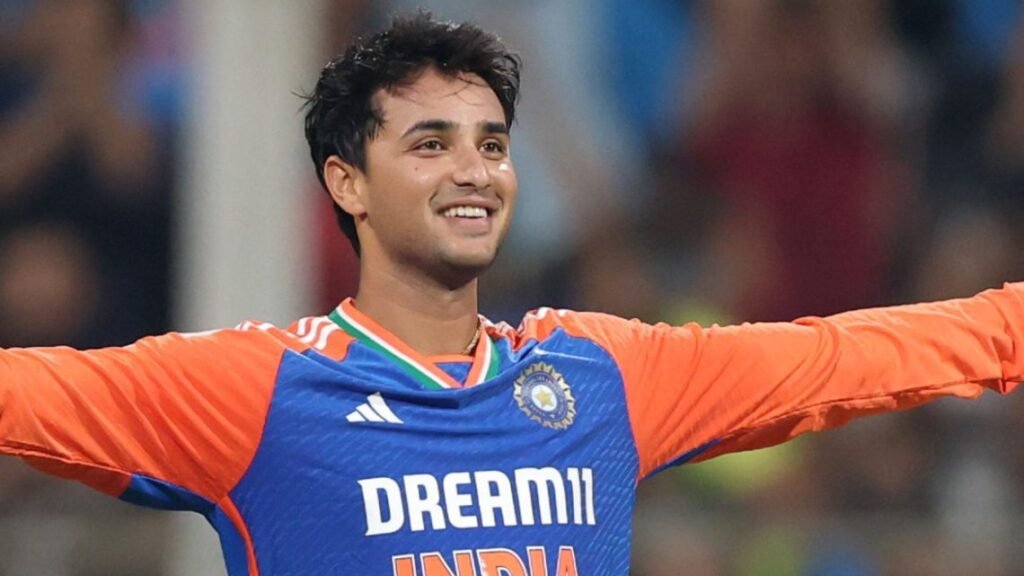
Abhishek Sharma’s Early Formation And Identity
Early Environment And First Foundations
The rise of a young cricketer is rarely a single moment. Instead, it is the result of layered experiences that stack on top of each other: supportive environments, structured coaching, and self-driven hunger. Abhishek grew up in a region known for producing bold, fearless players. The emphasis on all-round development, competitive club cricket, and tightly knit cricketing communities shaped his early cricketing culture.
Abhishek Sharma left-handed batting stance became an early marker of identity. Even as a youngster, coaches noticed he combined natural timing with unusual power for his age. His technique was compact and uncluttered, allowing him to hit through the line with a level of freedom that young players often struggle to achieve. As his game matured, these early foundations would prove critical.
Psychological Traits Formed Early
Before a batter becomes dangerous on the field, they must first make peace with uncertainty. Abhishek Sharma mentality during youth cricket was built around fearlessness. Not recklessness, but a calm belief that scoring runs requires intent, not hesitation. This early mindset became the blueprint for his later success in powerplays, where decision-making windows shrink and confidence is paramount.
Coaches observed three distinct traits in him:
- A refusal to be intimidated by pace or movement
- Ability to reset mentally after a mistake
- Clarity in shot selection at a very young age
These traits would later define his performances in professional cricket.
Journey Through India’s Youth Structure
The Importance Of Strong Age-Group Competition
India’s under-age structure is known for producing cricketers who are technically refined and mentally hardened. Competition is intense, selection is strict, and performances are scrutinized. In such an environment, only players with strong foundational identity survive.
Abhishek Sharma thrived. Not simply because of skill, but because he understood how to manage pressure early. Whether opening or stabilizing the middle order, he maintained high scoring intent—a rare trait in youth cricket, where players often protect their wicket excessively.
Transition Into Senior-Level Cricket
For most young talents, the transition from age-group to senior domestic cricket exposes critical gaps in technique and temperament. But Abhishek adjusted quickly. His early domestic appearances showcased the same fearlessness but added layers of tactical awareness.
He learned:
- When to shift gears
- How to manipulate field placements
- How to pick bowlers to target
- How to control tempo rather than chase it
This growth was not accidental. It came from the realization that senior cricket punishes impulsive aggression but rewards calculated intent.
The Evolution Of His Batting Philosophy
The Architecture Of A Modern White-Ball Batter
Abhishek Sharma’s batting represents the evolution of white-ball cricket in India. His approach fits the demands of contemporary T20s and the direction of modern one-day cricket.
His philosophy rests on four pillars:
- Attack the powerplay – Maximize fielding restrictions with clean hitting and strong back-foot play.
- Maintain high strike rates without sacrificing control – Aggression is strategic, not emotional.
- Use a stable base for power generation – Minimal movement allows explosive bat swing.
- Stay unfazed by match situation – Whether at 10 for 2 or 80 for no loss, his intent remains consistent.
Technical Minimalism
Modern batting rewards minimalism. Abhishek does not overcomplicate footwork or bat angles. His game is built on:
- A strong base
- Stable head position
- Compact backlift
- Free bat swing
- Full extension after contact
This allows him to hit through the line even against pace.
Control Over Length-Based Bowling
One of his biggest strengths is controlling short and good-length deliveries. Many young players dominate full balls but struggle with the in-between lengths. Abhishek, however, adapts:
- Back-foot punches against pace
- Late cuts against spin
- Pull shots with excellent balance
This ability gives him scoring options that bowlers find difficult to negate.
Understanding His Role As A Powerplay Enforcer
Why He Thrives In Overs 1–6
The powerplay is where Abhishek Sharma value skyrockets. His shot selection perfectly aligns with fielding restrictions. He drives on the up, sweeps early, steps out against pace, and lifts through the covers effortlessly.
His early acceleration is a product of:
- Strong bottom-hand control
- Natural extension through the ball
- Willingness to take risks without panic
- Ability to read length quickly
The Science Of His Hitting Arc
Abhishek Sharma hitting arc is wide and fluid, giving him a natural advantage in lofted shots. His bat swing generates enough lift without requiring brute force. Most of his power comes from timing and core rotation rather than muscular strength.
Pressure-Handling In The First Overs
Where many batters freeze or overhit in pressure, Abhishek remains centered. His mental rhythm is not disrupted by:
- Scoreboard pressure
- Early breakthroughs
- Unfamiliar conditions
- Changes in bowling plan
This mental clarity sets him apart from equally talented peers.
Middle-Overs Evolution And Adaptability
Shift From Attacker To Stabilizer When Required
Although known for powerplay destruction, Abhishek Sharma is not a one-dimensional hitter. In the middle overs, he transitions into:
- A strike-rotator
- A situation-reader
- An anchor when collapse occurs
- A middle-overs sweeper against spin
His adaptability prevents stagnation in the innings.
His Game Against Spin
His strengths include:
- Early footwork
- Natural ability to read trajectory
- Sweep and slog-sweep range
- Lofted shots with minimal risk
Spinners often try to drag him wide or shorten the length, but Abhishek’s reach and balance help cover gaps effectively.
A Deeper Look Into His Bowling Identity
His Left-Arm Orthodox Style
While batting is his primary craft, his left-arm spin offers tactical value. He bowls with:
- Repeatable action
- Good control of pace
- Flatter trajectory for containment
- Selective flight against slower tracks
When His Bowling Becomes A Strategic Asset
Captains use him:
- To break rhythm
- In slow pitches
- Against certain right-hander matchups
- To preserve strike bowlers for death overs
His bowling is not front-line, but it is precise and reliable.
Psychological Architecture Of Abhishek Sharma
Inner Calmness In High-Pressure Environments
Abhishek Sharma demeanor stands out. He rarely shows emotion, whether hitting boundaries or losing his wicket. This calmness is not a lack of intensity; it is a controlled internal environment that helps decision-making stay sharp.
The Competitive Mindset
His competitive nature is quiet but relentless. He approaches each game with a personal checklist:
- Dominate early
- Control tempo
- Avoid defensive bubbles
- Stay present, not future-focused
This mindset gives him emotional insulation from external noise.
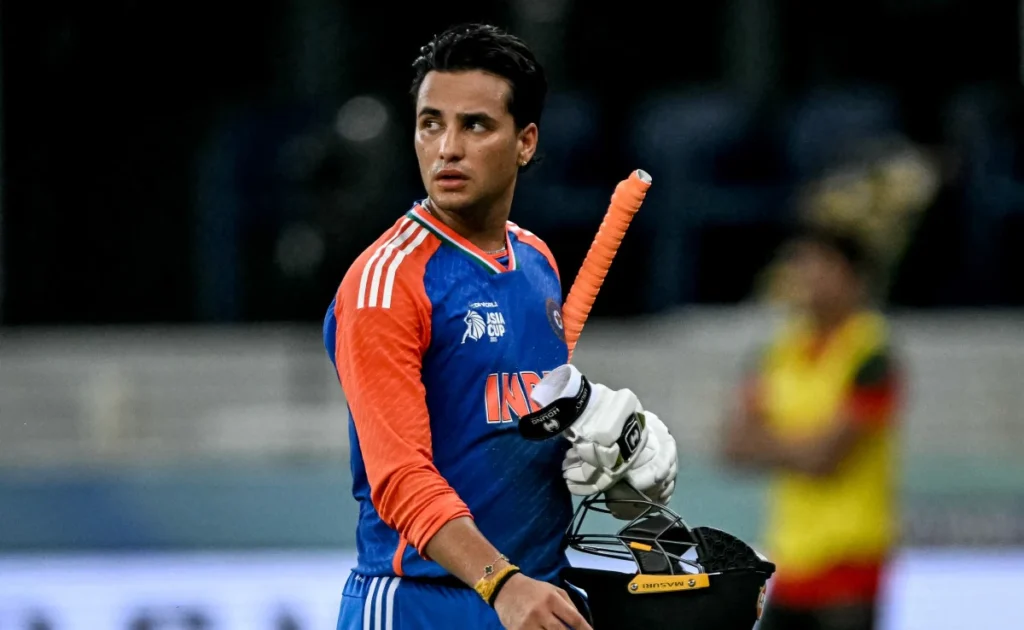
Leadership Qualities And Team Impact
Silent Leadership
Abhishek Sharma is not a vocal leader, but his influence is felt through:
- Preparation habits
- Consistency
- Role clarity
- Situational intelligence
Teammates often reference his discipline and routine as role models.
Adaptability In Different Team Cultures
Whether domestic or franchise cricket, he adapts smoothly to varied environments. He is comfortable:
- Opening or batting at three
- Accelerating early
- Anchoring when pressure increases
- Taking responsibility after failures
This adaptability hints at future leadership potential.
Technical Breakdown Of His Batting Mechanics
Stance And Alignment
His stance is:
- Open
- Balanced
- Slightly low for stability
- Designed for early bat speed
Bat-Lift Characteristics
He maintains:
- A compact lift
- Straight corridor alignment
- Minimal unnecessary movement
This helps reduce lag and mis-hits.
Shot Execution Framework
His best shots include:
- Lofted cover drive
- Pick-up pull
- Back-foot punch
- Slog-sweep
- Straight loft
Each is powered by core rotation and stable base generation.
Match Awareness And Tactical Flexibility
Understanding Phases Of An Innings
Abhishek Sharma reads the game not by overs but in phases:
- Powerplay: attack
- Middle overs: rotate
- Build-up overs: reset
- Final overs: re-accelerate
Exploiting Matchups
He targets:
- Right-arm medium pacers
- Off-spinners with defensive fields
- Bowlers lacking pace variation
His matchup awareness grows each season.
Long-Term Potential And Future Projection
A Future India Opener?
Given his:
- Powerplay hitting
- Left-handed advantage
- All-round skill
- Modern temperament
He fits the prototype of India’s future limited-overs opener.
Suitability For ODI Cricket
His game scale is ideal for ODIs because:
- He accelerates quickly
- Plays spin well
- Adapts roles
- Can bowl part-time spin
Long-Term T20 Potential
He provides:
- Role clarity
- Matchup-specific aggression
- Fearless mindset
- Anchor capability when required
These traits are prized in T20s globally.
Conclusion
Abhishek Sharma stands at the intersection of talent, technique, temperament, and modern cricketing demands. His identity is not defined by a single skill but by a multi-layered architecture of abilities that shape him into one of India’s most promising next-generation cricket stars.
He embodies:
- The confidence of a powerplay hitter
- The adaptability of a middle-overs tactician
- The maturity of a seasoned professional
- The fearlessness of a modern white-ball specialist
If his trajectory continues, Abhishek Sharma is not just a future Indian regular; he may very well become one of the defining limited-overs batters of his era.