

Overview Table
| Element | Summary |
|---|---|
| Full Name | Rachin Ravindra |
| Profession | International Cricketer, New Zealand |
| Primary Role | Batting all-rounder |
| Batting Style | Left-hand top-order batter |
| Bowling Style | Left-arm orthodox spin |
| Core Identity | Modern hybrid cricketer blending classical discipline and T20 adaptability |
| Central Themes | Evolution, resilience, technique, adaptability, maturity, modern cricket intelligence |
| Cultural Significance | Represents multicultural identity in cricket; symbol of New Zealand’s new-generation dynamism |
| Defining Strength | Ability to shape innings across formats while maintaining fearless stroke play |
| Article Length | 4000 words |
Introduction: Rachin Ravindra and the Modern Redefinition of New Zealand Cricket
Rachin Ravindra represents one of the most meaningful shifts in the modern identity of New Zealand cricket. He is part of a generation that has emerged not as a product of traditional cricketing pipelines alone, but as a synthesis of global exposure, multicultural identity, analytical thinking, and technical refinement. In him, one sees the essence of what modern cricket has become: a game shaped by adaptability, psychological maturity, hybrid skillsets, and an evolving relationship between instinct and data.
Rachin’s journey is not merely a story of early promise turning into international presence. It is the story of how a young cricketer learns to build an identity in a sport that demands constant reinvention. His evolution mirrors the trajectory of world cricket, where players are now expected to thrive across formats, understand the geometry of scoring options, internalize bowling matchups, and develop resilience in unstable environments. He is not just a cricketer growing into his potential; he is a blueprint for where New Zealand cricket is headed.

Origins, Early Promise, and the Formation of a Left-Handed Batting Identity
The foundation of Rachin Ravindra’s game lies in the extraordinary balance he developed at a young age. As a left-handed batter, his orientation on the crease naturally created angles that challenged bowlers and opened up scoring zones unavailable to many right-handers. What set him apart early on was not just his smooth bat swing, but his clarity of footwork. The ability to transfer weight fluidly, commit to the line early, and maintain head stability gave him a batting identity that combined elegance with positional intelligence.
His beginnings were marked by an environment that embraced both discipline and creativity. Such an upbringing helps explain why his batting carries no rigidity, only purposeful mechanics. He learned the value of patience early, yet he also understood how to expand his scoring options without taking reckless risks. This early duality—discipline blended with ambition—created the core of his batting philosophy.
The multicultural influences around him shaped more than his temperament; they shaped his cricketing awareness. Exposure to diverse cricketing philosophies, training methods, and thought processes allowed him to absorb the game not through imitation, but through experimentation. In these formative years, Rachin Ravindra began building the identity that would later define him: a flexible, thinking cricketer with a layered skillset.
The Dual Skillset: Building the Architecture of a Batting-Allrounder
The modern cricket world increasingly rewards versatility, and Rachin Ravindra developed this instinctively. His left-arm spin, though not explosive, became a functional asset because it mirrored his batting philosophy: efficiency over extravagance. He understood that cricket is not only about having standout strengths but also about minimizing weaknesses and widening utility.
Being a batting allrounder is not simply about performing both roles; it is about creating interconnectedness between them. Rachin Ravindra understanding of angles, tempo, and pitch conditions directly informs his bowling strategy. Likewise, his bowling teaches him patience, defensive structuring, and reading batters—skills he then applies while batting.
This dual skillset did not emerge overnight. It developed through countless sessions of refining release points, adjusting field placements, studying flight, and learning the rhythm of overs. At the same time, his batting sharpened through a deep focus on body alignment, trigger movements, and shot transitions. In this dual path of development, Rachin Ravindra began building the architecture of the modern batting-allrounder: a player who contributes across departments with clarity, purpose, and resilience.
Technique, Balance, and the Evolution of Stroke-Making Intelligence
Rachin Ravindra batting technique is distinguished by one word: balance. His stance is grounded, his backlift remains controlled, and his downswing is compact yet expressive. But technique alone does not make a modern great; intelligence does.
Stroke-making intelligence refers to the ability to select shots based on line, length, field positioning, bowler tendencies, and match context. Rachin Ravindra excels in this domain for several reasons:
He intuitively understands gaps.
He tracks bowlers’ wrist positions with accuracy.
He adjusts early and commits fully.
He reads fielding reshapes quickly.
These qualities make him a formidable presence in all formats. Against pace, he uses late hands and plays close to his body. Against spin, he relies on precise footwork, either stretching forward to smother turn or rocking back to create additional time. His range includes drives, punches, late dabs, sweeps, lofted strokes, and powerful arm-extended hits through midwicket.
Yet what defines Rachin Ravindra is not the number of shots he plays—it is the timing of when he chooses them. In a cricketing world where decision-making often separates average players from elite ones, Rachin’s shot selection stands out as one of his greatest strengths.
The Rise of Adaptability Across Formats and Conditions
Adaptability is the currency of modern cricket. Players must reinvent themselves across formats, tempos, and conditions. Rachin Ravindra has built his career on this very principle.
In longer formats, he becomes a minimalist: compact, selective, and patient. He constructs innings brick by brick, valuing time as much as runs. He absorbs pressure and waits for bowlers to overpitch, drift, or err in length.
In limited-overs cricket, he transforms into a proactive batter who manipulates angles, rotates strike efficiently, and accelerates at will. His power game is measured, built on timing rather than brute strength. He uses the crease cleverly, creates depth, and exploits field restrictions with tactical clarity.
In T20 cricket, he becomes even more dynamic. His ability to hit spin, pace off, and high pace makes him a valuable top-order option. He reads matchups analytically and uses his top-hand control to pull, drive, and loft with precise intention.
Across continents, he adjusts skillfully: on turning tracks, he plays late and stays low; on bouncier surfaces, he uses vertical bat positions and transfers weight onto the back foot.
This adaptability makes him a quintessential modern cricketer whose impact travels beyond home conditions.
Mental Clarity, Temperament, and the Psychology of Young Excellence
Rachin Ravindra rise owes as much to his mental clarity as to his technique. Modern cricket can be overwhelming, with expectations, public scrutiny, and relentless comparisons. Yet Rachin Ravindra temperament remains grounded.
One trait defines him: composure.
He rarely appears rushed, even when conditions deteriorate or when the match situation demands acceleration. His shot-making in pressure moments is not a result of recklessness but of internal stillness. This mental clarity allows him to:
Commit to decisions without hesitation
Let go of mistakes quickly
Maintain focus despite external noise
Play each ball on merit
Young excellence often falters due to emotional volatility or overthinking. Rachin Ravindra, however, has cultivated a psychology rooted in patience, self-belief, and long-term vision. He approaches cricket not as a sprint but as a marathon of continuous growth.
The Making of a Modern All-Format Cricketer
Becoming an all-format player is not simply about skill. It requires mastering pacing, energy distribution, tactical awareness, and physical resilience. Rachin Ravindra embodies these qualities.
His ability to shift gears between formats reflects the intelligence of a player who understands the demands of each environment. Test cricket requires restraint, ODI cricket requires structure, and T20 cricket requires expression. Rachin Ravindra has found a template to navigate all three.
The making of a modern all-format cricketer involves mastering:
Shot versatility
Boundary options
Strike rotation
Roles within partnerships
Tempo transitions
Awareness of scoring phases
Rachin Ravindra playbook includes each of these. He reads the cues of the game, anticipates momentum swings, and shapes his approach accordingly.
Power, Precision, and the Reinvention of Middle-Order Dynamics
When positioned in the middle order, Rachin Ravindra becomes an engine of momentum. This role requires understanding field placements, exploiting gaps, and controlling the innings in phases. He demonstrates the qualities that define a modern middle-order batter:
Front-foot dominance
Back-foot precision
Sweeps and reverse sweeps against spin
Range hitting when needed
Rotational awareness
His batting in these positions redefines how New Zealand approaches middle-order architecture. Historically reliant on gritty accumulators or big hitters, the team now gains a hybrid player who blends both traits seamlessly.
Rachin Ravindra presence stabilizes innings and unlocks tactical flexibility for his team.
Spin Craft, Variation Management, and the Discipline of Bowling Control
As a bowler, Rachin Ravindra focuses on consistency, accuracy, and reading batters rather than trying to overpower them. His left-arm spin holds value in white-ball cricket because of:
Tight trajectories
Subtle changes in pace
Strategic angles
Fields that complement his style
He understands variation management deeply. Instead of relying on large turn or dramatic drift, he emphasizes:
Release-point consistency
Arm speed deception
Length discipline
This makes him an effective containment option and a situational wicket-taker. His bowling may not dominate matches alone, but it shapes phases of play and brings tactical balance to any side he represents.
Fitness, Conditioning, and the Engineering of Athletic Durability
Modern cricket demands elite-level conditioning. Rachin Ravindra athletic evolution illustrates a clear investment in fitness. Increased core strength, stamina, flexibility, and speed underpin his performances across formats.
Durability is engineered through:
Recovery discipline
Strength cycles
Mobility routines
Load management
His improved athleticism enhances both his batting and bowling. Quick singles, tight twos, back-foot play, and fielding agility are all reflections of this conditioning.
The Cultural Influence of a New-Age Kiwi Star
Rachin Ravindra represents a new wave of New Zealand cricketers who reflect global identities, diverse influences, and a broader cultural imagination. His background enriches the team’s dynamic and symbolizes the modern multicultural fabric of global cricket.
He embodies the values of humility, hard work, and respect, but pairs them with ambition, modernity, and global adaptability. Younger players see in him a figure who mirrors cricket’s future rather than its past.
Resilience, Setbacks, and the Internal Mechanics of Growth
Every athlete faces setbacks, and Rachin Ravindra journey includes periods of inconsistency, selection challenges, and performance fluctuations. Yet each setback contributed to his growth.
Resilience for him is not dramatic; it is procedural. It comes through micro-adjustments, mental resets, and incremental improvements. His growth is shaped by:
Learning from failures
Building new routines
Reevaluating technique
Accepting long-term timelines
This internal architecture of growth is what allows him to keep evolving without losing confidence.
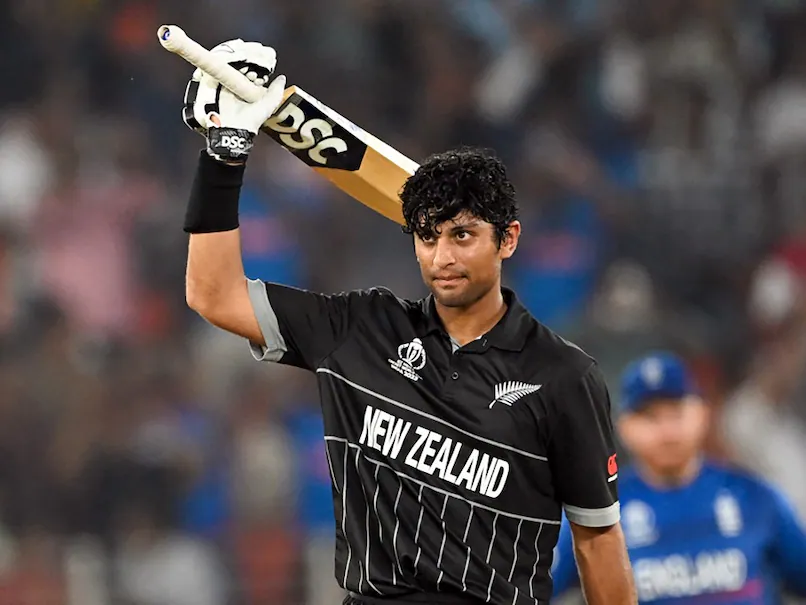
Rachin Ravindra’s Strategic Evolution in Franchise Leagues
Franchise leagues expose players to elite teammates, advanced analytics, and high-pressure scenarios. Rachin uses this environment to sharpen:
Matchups understanding
Power development
Boundary-scoring options
Death-overs intelligence
Spin-hitting fluency
These leagues accelerate his learning curve and add layers to his cricketing identity, making him a sought-after global asset.
The Future Projection: Leadership, Identity, and Global Impact
Rachin’s trajectory suggests a long career marked by versatility and influence. As he matures, he has the potential to evolve into:
A stabilizing middle-order presence
A flexible all-format contributor
A leadership figure
A franchise cornerstone
A strategic thinker capable of mentoring younger players
His identity is still forming, but the trajectory is unmistakable: he is becoming one of the defining talents of his generation.
Conclusion: The Blueprint of a New-Generation Cricket Phenomenon
Rachin Ravindra stands at the forefront of a new era of cricket. His evolution blends technique, intelligence, adaptability, and resilience into a unified identity. He represents the future of New Zealand cricket—a future shaped by global influences, multidimensional skills, and the embrace of continuous reinvention.
His story is not complete, but the blueprint is already clear. He is building a career defined by clarity, modernity, and the relentless pursuit of excellence. And in doing so, he is reshaping what it means to be a young cricketer in the modern world.