
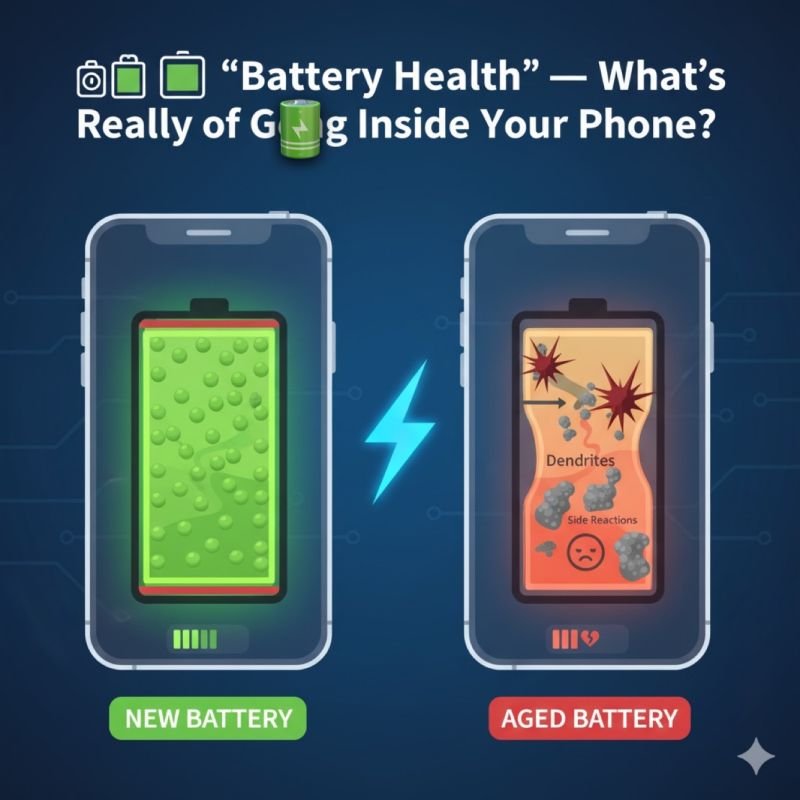
Overview Table: Fast Charging vs Battery Health
| Aspect | Fast Charging | Battery Health |
|---|---|---|
| Primary Goal | Reduce charging time | Maintain long-term capacity |
| Key Influence | Charging speed and power | Heat, charge cycles, voltage |
| User Benefit | Convenience and speed | Device longevity |
| Main Risk | Increased heat generation | Capacity loss over time |
| Modern Mitigation | Smart charging algorithms | Battery management systems |
| Long-Term Impact | Depends on usage habits | Gradual, unavoidable aging |
| Manufacturer Role | Power delivery control | Software and hardware tuning |
| User Control | Charging habits | Temperature and usage care |
Introduction
Fast charging has become one of the most advertised features in modern smartphones, laptops, electric vehicles, and wearable devices. Manufacturers compete aggressively by promoting higher wattage numbers, shorter charging times, and impressive marketing claims about reaching full charge in minutes. For consumers, charging offers clear convenience. It reduces waiting time, supports busy lifestyles, and allows devices to stay usable throughout the day.
At the same time, concerns about battery health have grown alongside charging adoption. Users often wonder whether charging at high speeds damages batteries, shortens lifespan, or reduces long-term performance. These concerns are not unfounded. Batteries are complex chemical systems, and how they are charged plays a significant role in how they age.
This article explores the relationship between charging and battery health in depth. It explains how batteries work, how charging operates, what actually causes battery degradation, and whether modern charging technologies genuinely protect battery longevity. The goal is to provide a clear, balanced, and practical understanding without relying on external sources.
How Rechargeable Batteries Work
Basics of Lithium-Based Batteries
Most modern devices use lithium-ion or lithium-polymer batteries. These batteries store energy by moving lithium ions between two electrodes through an electrolyte. When a device charges, lithium ions move in one direction; when it discharges, they move back.
This process is reversible but not perfect. Each charge and discharge cycle causes minor chemical changes inside the battery. Over time, these changes reduce the battery’s ability to store energy.
What Battery Capacity Really Means
Battery capacity refers to how much charge a battery can hold compared to its original state. As batteries age, their maximum capacity decreases. This is why older devices drain faster even if used lightly.
Capacity loss is influenced by factors such as temperature, voltage stress, and charging patterns, not just by the presence or absence of charging.
Understanding Fast Charging Technology
What Is Fast Charging
Fast is a method of delivering higher electrical power to a battery to reduce charging time. Power is determined by voltage and current. Increasing either allows more energy to flow into the battery per unit of time.
Charging does not mean that the battery charges at maximum speed all the time. Charging speed changes dynamically throughout the charging process.
Charging Phases Explained
Battery charging typically happens in two main phases. In the first phase, the battery accepts high current, allowing rapid energy intake. In the second phase, charging slows down to protect the battery as it approaches full capacity.
This two-phase approach is crucial because most battery stress occurs near full charge, not at low or moderate levels.
Role of Charging Protocols
Modern charging relies on communication between the charger, cable, and device. Charging protocols allow devices to request specific power levels based on battery temperature, state of charge, and internal conditions.
This intelligent negotiation is designed to minimize damage while maximizing speed.
What Actually Damages Battery Health
Heat as the Primary Enemy
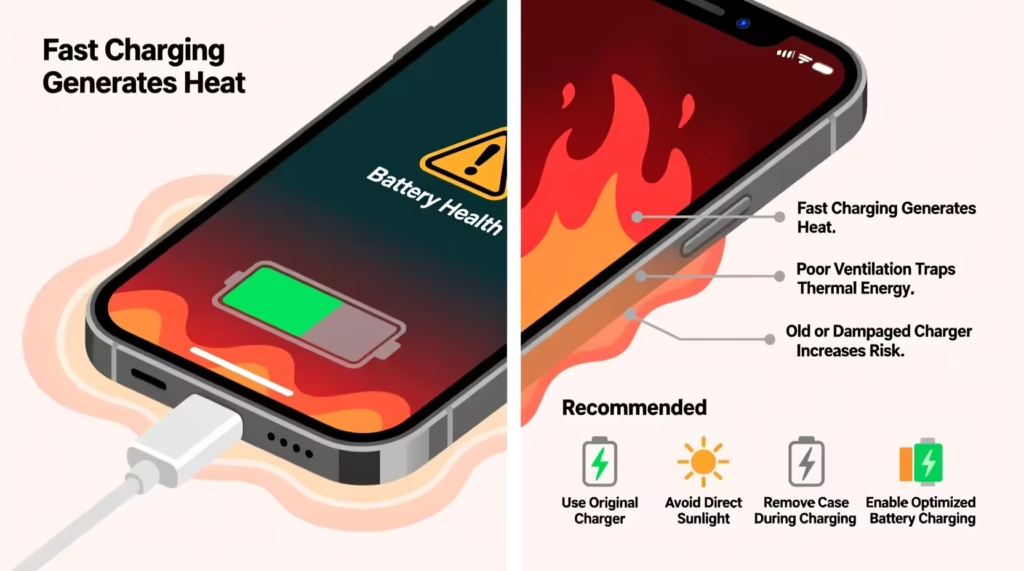
Heat is the most significant factor in battery degradation. High temperatures accelerate chemical reactions that permanently reduce battery capacity. Fast charging can generate heat, but it is not the only source.
Gaming, heavy multitasking, and poor ventilation can raise device temperatures just as much as charging.
Voltage Stress and Overcharging
Keeping a battery at high voltage for extended periods stresses its chemical structure. This often happens when devices are kept at full charge for long durations, especially in warm environments.
Modern devices prevent true overcharging, but remaining at or near full charge still contributes to aging.
Charge Cycles and Usage Patterns
A charge cycle is completed when a battery uses the equivalent of its full capacity, even if spread across multiple partial charges. More cycles mean more wear, regardless of charging speed.
Charging does not inherently increase cycle count, but frequent top-ups can.
Fast Charging vs Battery Health: The Real Relationship
Is Fast Charging Always Harmful
Charging is not inherently harmful when implemented correctly. Modern battery management systems closely monitor temperature, voltage, and current to prevent excessive stress.
Damage occurs primarily when charging is combined with high heat, poor power regulation, or low-quality chargers.
Why Older Fast Charging Was Riskier
Early charging methods lacked advanced temperature monitoring and adaptive control. These systems often delivered high current without sufficient safeguards, increasing heat and degradation.
Modern implementations are significantly safer due to better hardware and software coordination.
How Modern Devices Reduce Risk
Manufacturers use techniques such as:
- Temperature-based power throttling
- Slower charging near full capacity
- Battery segmentation
- Optimized charging curves
These measures reduce the long-term impact of fast charging on battery health.
Charging Speed and Long-Term Capacity Loss
Short-Term vs Long-Term Effects
In the short term, charging rarely causes noticeable damage. Long-term effects depend on how often charging is used and under what conditions.
Occasional fast charging has minimal impact. Constant high-speed charging in hot environments increases wear.
Battery Aging Is Unavoidable
All batteries degrade over time regardless of charging speed. The goal is not to eliminate aging but to slow it.
Fast charging may slightly accelerate aging under certain conditions, but it is rarely the dominant factor.
Common Myths About Fast Charging
Myth: Fast Charging Always Destroys Batteries
This belief is outdated. With modern protections, fast charging is generally safe for everyday use.
Myth: Slow Charging Is Always Better
Slow charging produces less heat, but poor thermal conditions or extended full-charge periods can still harm battery health.
Myth: Third-Party Chargers Are Always Unsafe
Quality third-party chargers that follow proper standards can be as safe as original ones. Problems arise from poorly designed or incompatible chargers.
User Habits That Matter More Than Charging Speed
Temperature Awareness
Keeping devices cool has a greater impact on battery health than avoiding fast charging. Avoid charging in direct sunlight or under pillows.
Avoiding Constant Full Charge
Maintaining a battery at full charge for extended periods increases stress. Partial charging habits can help reduce wear.
Balanced Charging Practices
Using fast charging when needed and slower charging when convenient offers a balanced approach that supports both convenience and longevity.
Fast Charging in Different Device Categories
Smartphones and Tablets
Smartphones benefit most from fast charging due to daily use patterns. Modern devices manage charging carefully, making fast charging generally safe.
Laptops
Laptops often remain plugged in for long periods, making voltage stress a larger concern than charging speed. Battery management software plays a crucial role.
Electric Vehicles
Electric vehicles use advanced thermal management and charging curves. Fast charging impacts long-term battery health more noticeably due to higher energy levels, but safeguards are extensive.
Manufacturer Strategies to Protect Battery Health
Software-Based Optimization
Many devices include features that learn user habits and adjust charging speed to reduce time spent at full charge.
Hardware Design Improvements
Better cooling, improved battery chemistry, and more accurate sensors reduce degradation risks associated with fast charging.
User-Facing Controls
Some manufacturers allow users to limit charging speed or cap maximum charge levels, giving greater control over battery health.
When Fast Charging Makes Sense
Emergency and Time-Critical Situations
Fast charging is ideal when time is limited. The convenience outweighs the minimal long-term impact.
Daily Top-Ups
Short fast charging sessions from low to moderate charge levels are less stressful than prolonged charging near full capacity.
Travel and Mobility Needs
For users frequently on the move, fast charging enhances usability without significantly harming battery health.
When Slower Charging Is Preferable
Overnight Charging
Slower charging reduces heat buildup during long sessions, especially when the device is not actively used.
High-Temperature Environments
In hot conditions, reducing charging speed helps limit thermal stress.
Long-Term Device Ownership
Users planning to keep devices for many years may benefit from more conservative charging habits.
The Hidden Truth Behind the Debate
Fast charging itself is not the primary enemy of battery health. Heat, sustained high voltage, and poor usage habits play a much larger role. Modern fast charging systems are designed with multiple safeguards that significantly reduce risk.
The hidden truth is that battery aging is inevitable, and focusing solely on charging speed oversimplifies the issue. Intelligent charging behavior, temperature management, and realistic expectations matter far more than avoiding fast charging entirely.
Final Thoughts
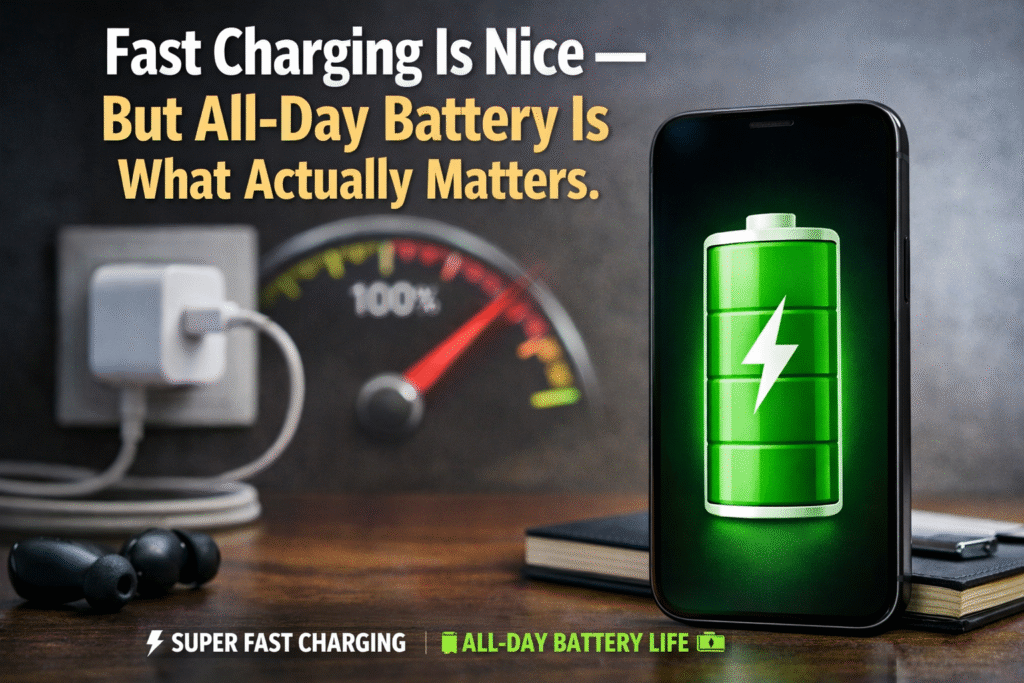
Fast charging and battery health are not opposing forces when modern technology is used correctly. Fast charging offers undeniable convenience, and when combined with intelligent battery management, its impact on long-term battery health is manageable.
For most users, the best approach is a balanced one. Use fast charging when needed, avoid excessive heat, and adopt mindful charging habits. Understanding how batteries age empowers users to make informed choices without unnecessary fear. In the end, convenience and longevity can coexist when supported by thoughtful design and responsible usage.