

Overview Table: AMOLED vs IPS Display Comparison
| Aspect | AMOLED Display | IPS Display |
|---|---|---|
| Full Form | Active Matrix Organic Light Emitting Diode | In-Plane Switching Liquid Crystal Display |
| Light Source | Self-emissive pixels | LED backlight |
| Black Levels | True black (pixels turn off) | Dark gray (backlight always on) |
| Contrast Ratio | Extremely high | Moderate |
| Color Saturation | High, vivid | Natural, accurate |
| Brightness Consistency | Varies by content | Uniform |
| Power Efficiency | High for dark content | Consistent power use |
| Viewing Angles | Excellent | Excellent |
| Thickness | Thinner panels | Slightly thicker |
| Burn-in Risk | Possible over time | None |
| Lifespan | Organic material degradation | Longer lifespan |
| Outdoor Visibility | Good with high brightness | Very strong |
| Cost | Higher | Lower |
Introduction
Display technology plays a decisive role in how we experience smartphones, laptops, tablets, monitors, and televisions. No matter how powerful a processor is or how advanced a camera system becomes, the display remains the primary interface between the user and the device. Among the many display technologies available today, AMOLED vs IPS stand out as the most widely discussed and commonly compared.
The debate between AMOLED and IPS is not merely about which display looks better at first glance. It involves deeper considerations such as color accuracy, power efficiency, longevity, eye comfort, brightness behavior, manufacturing complexity, and real-world usability across different scenarios. Each technology reflects a different engineering philosophy and targets different user priorities.
This article offers a complete, experience-driven, and technically grounded comparison of AMOLED vs IPS displays. It avoids marketing exaggeration and focuses instead on how these technologies actually perform in daily use. By combining narrative explanation, analytical comparison, technical clarity, and journalistic balance, this guide helps you understand not only which display is better, but which display is better for you.
Understanding Display Technology Fundamentals
Why Display Technology Matters
A display is not just a visual output; it defines readability, immersion, eye comfort, and energy consumption. The choice between AMOLED vs IPS affects how content appears, how long a battery lasts, and how a device performs in different lighting conditions.
Understanding the underlying technology provides clarity on why each display behaves the way it does and why preferences vary among users.
What Is AMOLED Display Technology
Core Working Principle
AMOLED displays use organic compounds that emit light when an electric current passes through them. Each pixel is self-illuminating, meaning it does not rely on a separate backlight. This allows precise control over brightness at the pixel level.
When a pixel needs to display black, it simply turns off completely, producing true black rather than dark gray.
Active Matrix Structure
The term “Active Matrix” refers to the use of thin-film transistors to control each pixel individually. This improves refresh rates, response time, and overall display efficiency.
What Is IPS Display Technology
Evolution of LCD Displays
IPS is a type of LCD technology developed to overcome the limitations of older TN panels. It improves color reproduction and viewing angles by aligning liquid crystals horizontally rather than vertically.
Backlight Dependency
IPS displays require a constant LED backlight. Liquid crystals act as shutters that control how much light passes through to form images. Even when displaying black, the backlight remains on, limiting black depth.
Color Accuracy and Reproduction
AMOLED Color Characteristics
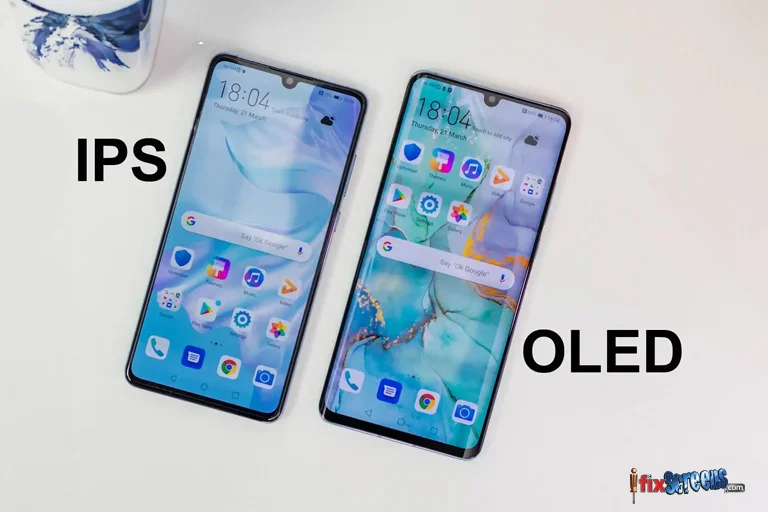
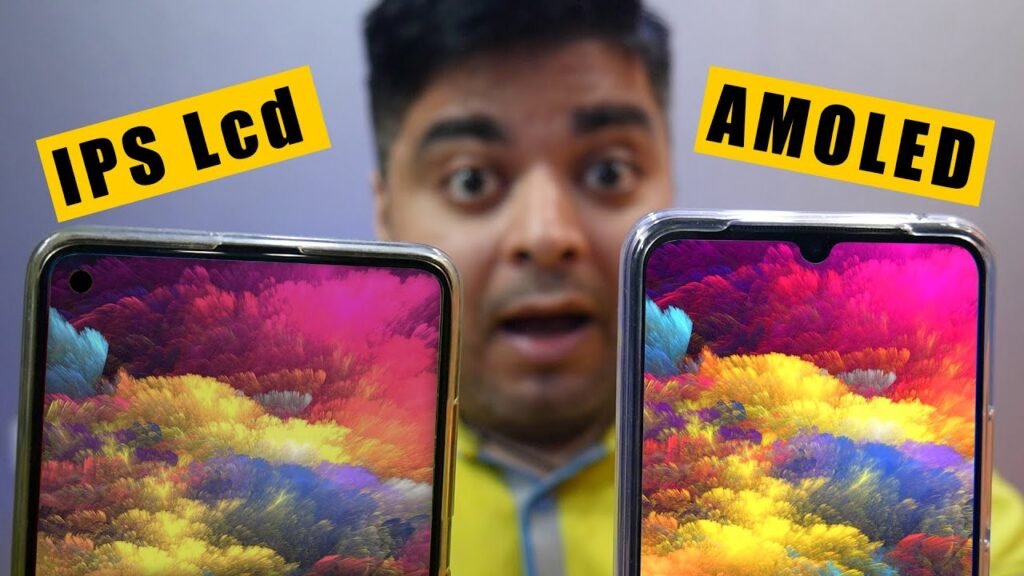
AMOLED displays are known for vibrant, saturated colors. Reds appear deeper, blues look more intense, and overall visuals feel punchy and dramatic. This makes AMOLED particularly appealing for multimedia consumption.
However, high saturation does not always equal accuracy. Out-of-the-box AMOLED displays may prioritize visual impact over color neutrality unless carefully calibrated.
IPS Color Characteristics
IPS displays excel in color accuracy and consistency. Colors tend to appear more natural and balanced, making IPS a preferred choice for professionals involved in photo editing, design, and color-sensitive work.
For users who value realism over vibrancy, IPS often feels more trustworthy.
Contrast Ratio and Black Levels
AMOLED True Black Advantage
Because AMOLED pixels can turn off entirely, black areas consume no power and appear perfectly black. This creates an infinite contrast ratio that enhances depth and realism, especially in dark scenes.
IPS Contrast Limitations
IPS displays struggle to produce true black due to backlight bleed. Blacks appear as dark gray, particularly noticeable in low-light environments or when watching content with dark scenes.
Brightness and Outdoor Visibility
AMOLED Brightness Behavior
AMOLED displays can achieve high peak brightness, especially for HDR content. However, brightness may vary depending on content due to power and thermal management.
In direct sunlight, readability depends heavily on peak brightness tuning and anti-reflective coatings.
IPS Brightness Consistency
IPS displays offer stable and uniform brightness across the screen. They perform reliably in outdoor conditions, often maintaining readability even under strong sunlight.
Power Consumption and Battery Impact
AMOLED Power Efficiency
AMOLED displays are more power-efficient when displaying dark themes or black backgrounds because inactive pixels consume no energy. This makes AMOLED particularly effective in system-wide dark modes.
Bright content, however, can increase power usage significantly.
IPS Power Behavior
IPS displays consume a relatively constant amount of power regardless of displayed content because the backlight remains on. While less adaptive, power usage is predictable and stable.
Viewing Angles and Uniformity
AMOLED Viewing Performance
AMOLED displays offer excellent viewing angles with minimal color shifting. However, some panels may exhibit slight color tint changes at extreme angles.
IPS Viewing Performance
IPS technology is renowned for consistent color and brightness across wide viewing angles. This uniformity is one of its strongest advantages.
Response Time and Motion Handling
AMOLED Speed Advantage
AMOLED pixels switch on and off extremely fast, resulting in minimal motion blur. This benefits gaming, fast scrolling, and high-frame-rate video playback.
IPS Motion Performance
IPS displays have improved significantly over the years, but response times are generally slower than AMOLED. For most users, this difference is negligible outside competitive gaming scenarios.
Burn-In and Image Retention
AMOLED Burn-In Risk
Because AMOLED uses organic materials, prolonged display of static elements can cause uneven pixel aging, leading to burn-in. Modern software mitigations reduce risk but do not eliminate it entirely.
IPS Longevity Advantage
IPS displays do not suffer from burn-in. This makes them more suitable for static content, long working hours, and professional environments.
Display Lifespan and Durability
AMOLED Aging Characteristics
Over time, organic pixels degrade, particularly blue subpixels. This can lead to color shifts after years of use.
IPS Longevity
IPS displays maintain color consistency and brightness over longer periods, making them reliable for long-term usage.
Thickness and Design Flexibility
AMOLED Design Benefits
AMOLED vs IPS panels are thinner and more flexible, enabling curved screens, foldable devices, and innovative form factors.
IPS Structural Constraints
IPS displays require additional layers for backlighting, making them thicker and less adaptable to flexible designs.
Cost and Manufacturing Complexity
AMOLED Cost Factors
AMOLED vs IPS manufacturing is complex and costly, contributing to higher device prices. Yield rates and material sensitivity also impact production costs.
IPS Cost Efficiency
IPS technology is more mature and cost-effective, allowing manufacturers to deliver reliable displays at lower price points.
Eye Comfort and Long-Term Viewing
AMOLED Eye Considerations
AMOLED vs IPS displays may use pulse-width modulation for brightness control, which can cause eye strain for sensitive users during low brightness usage.
IPS Eye Comfort
IPS displays typically use constant backlighting, which some users find more comfortable for extended reading and work sessions.
Use Case Analysis
Best for Multimedia and Entertainment
AMOLED vs IPS excels in media consumption, offering immersive visuals, deep blacks, and cinematic contrast.
Best for Productivity and Professional Work
IPS displays are better suited for tasks requiring color accuracy, text clarity, and long working hours.
Smartphones and Mobile Devices
Why Smartphones Favor AMOLED
Battery efficiency, thin design, and visual impact make AMOLED vs IPS ideal for modern smartphones.
Why IPS Still Exists
IPS remains common in budget and mid-range devices due to cost efficiency and reliability.
Laptops, Monitors, and Tablets
IPS Dominance in Professional Displays
Most professional monitors use IPS panels for accurate color reproduction and stability.
AMOLED vs IPS in Premium Devices
AMOLED is increasingly appearing in premium laptops and tablets aimed at content consumption and creative workflows.
Market Trends and Industry Direction
AMOLED Growth Trajectory
AMOLED vs IPS adoption continues to rise as manufacturing improves and costs decrease.
IPS Stability
IPS remains a dependable standard, especially in professional and enterprise environments.
Choosing the Right Display for Your Needs
Factors to Consider
Your choice should be guided by usage patterns, budget, viewing habits, and sensitivity to visual characteristics.
No Universal Winner
Neither AMOLED vs IPS is universally better. Each excels in specific areas and compromises in others.
Common Misconceptions About AMOLED vs IPS
Vivid Does Not Mean Accurate
Highly saturated colors may look impressive but may not reflect true color representation.
Older Myths No Longer Apply
Modern AMOLED vs IPS panels have addressed many early limitations through technological improvements.
Final Thoughts
The AMOLED vs IPS debate is not about declaring a single winner. It is about understanding trade-offs. AMOLED vs IPS delivers superior contrast, deeper blacks, and modern design flexibility, making it ideal for entertainment-focused and premium devices. IPS offers color accuracy, consistency, durability, and eye comfort, making it a trusted choice for professionals and long-term use.
Choosing between AMOLED vs IPS ultimately depends on how you use your device. When viewed through a practical and technical lens, both technologies represent refined solutions to different user needs rather than competing answers to the same problem.
Understanding these differences empowers users to make informed decisions rather than relying on surface-level impressions or marketing claims.