

Overview Table
| Category | Details |
|---|---|
| Full Name | Petr Evgenyevich Yan |
| Birth | 11 February 1993, Dudinka, Russia |
| Nationality | Russian |
| Primary Discipline | Mixed Martial Arts |
| Style Identity | High-precision striker, pressure fighter, counter-punch specialist |
| Stance | Switch-hitter (orthodox and southpaw), sharp boxing foundation |
| Weight Class | Bantamweight |
| Known For | Elite boxing fundamentals, defensive responsibility, timing, adaptability, tactical intelligence |
| Career Identity | Former UFC Bantamweight Champion; widely regarded as one of the most technically complete strikers in MMA |
| Characteristics | Strong fight IQ, patience, rhythm control, durability, high-volume pressure, fluid defensive movement |
Petr Yan Introduction: The Rise of a Precision-Based MMA Force
Petr Yan occupies a unique place in the modern landscape of mixed martial arts. He is neither the archetypal knockout artist nor the archetypal grappling specialist. Instead, he represents a new archetype: the high-precision, high-intelligence pressure striker who uses structure, rhythm, and calculation to break opponents systematically. His fighting identity is defined not by wild aggression, but by controlled violence. His offense is built not on chaos but on layered patterns. His advantages do not come from raw athleticism but from timing, discipline, and the ability to manipulate opponents into predictable reactions.
Yan’s career progression reveals an athlete who built his techniques brick by brick. His journey from Siberia to the pinnacle of the bantamweight division is not just a narrative of perseverance but of technical obsession. He studied boxing deeply and learned how to translate its concepts—distance control, feinting, guard manipulation, counter-timing—into a broader MMA ecosystem. Over time, he developed a hybrid striking identity that blends boxing fundamentals with kicking structures, cage-cutting methodologies, and wrestling defense.
This deep dive explores Yan’s evolution not simply as a fighter but as an architectural case study of how technique, mentality, and adaptability interact to produce an elite competitor at the highest level.

Petr Yan Early Life: Foundations of Discipline and Resilience
Petr Yan’s upbringing in the harsh climate of Dudinka shaped him long before he stepped into a ring. His early environment emphasized:
- Physical hardening
Siberian winters and a culture of toughness instilled resilience and durability, which later became trademarks of his fighting style. - Structured discipline
Yan was drawn to combat sports early, especially boxing. Unlike many fighters whose youth involved chaos or spontaneous scraps, Yan approached fighting as a structured discipline from childhood. - Work ethic through necessity
His early surroundings required mental and physical grit. This became the template for his professional training habits, which emphasize repetition, conditioning, and technique polishing. - Cultural values of perseverance
The Siberian ethos emphasizes perseverance through discomfort, a value reflected in Yan’s capacity to maintain pressure for entire fights and absorb adversity without emotional disruption.
These factors formed the psychological core that would later allow him to endure harsh training, adapt to high-level competition, and maintain composure under pressure.
Petr Yan The Boxing Foundation: Technical Roots That Define His MMA Identity
Unlike many MMA fighters who incorporate boxing as an accessory skill, Petr Yan built his combat identity on boxing fundamentals. He did not adopt boxing casually; he studied it deeply, mastering:
- Footwork mechanics
Yan’s footwork is a blend of Eastern European boxing principles—compact pivots, controlled lateral movement, and efficient balance shifts. - Guard responsibility
His high-tight guard, which adapts dynamically depending on the opponent, reflects a deep understanding of defense. - Combination construction
Yan does not throw one punch at a time. His combinations evolve fluidly, adjusting mid-sequence depending on opponent reactions. - Counter-timing and reads
One of Yan’s greatest strengths is reading the opponent’s patterns and responding with precise counters. - Distance management
Through boxing, he learned to judge distance with near mathematical accuracy. Most enemies find it difficult to land clean strikes on him for extended periods.
Yan’s boxing foundation became not just a part of his game but the core around which he built a complete MMA identity.
Petr Yan Early MMA Career: Learning the Multidimensional Game
Transitioning from boxing to MMA required Yan to integrate new disciplines into his arsenal. His early professional years were marked by the following developments:
4.1 Wrestling Adaptation
Yan learned to defend takedowns using:
- underhooks,
- hip positioning,
- reactive sprawls,
- cage awareness.
He approached wrestling with the same obsessive detail he applied to striking. Rather than becoming an offensive wrestler, he focused on building nearly impenetrable takedown defense.
4.2 Muay Thai and Kicking Systems
Yan added:
- calf kicks,
- body kicks,
- step-in knees,
- clinch elbows.
These were not added as separate tools but integrated into his boxing rhythm, creating unpredictable sequences.
4.3 Grappling Fundamentals
Though not a jiu-jitsu specialist, Yan learned positional grappling concepts that allowed him to:
- escape,
- scramble efficiently,
- avoid prolonged ground exposure.
4.4 Pressure-System Development
Yan built a unique pressure style defined by:
- patience early in fights,
- gradual volume increase,
- cage-cutting patterns,
- baiting opponents into overcommitting.
This development phase was essential to forming the complete fighter he would become.
Petr Yan The Evolution of His UFC Career: From Contender to Champion
Petr Yan’s entry into the UFC marked a new chapter of refinement and exposure to global talent. What made his rise rapid and convincing was not brute force but consistent application of technique, discipline, and fight IQ.
5.1 Adaptability as a Core Weapon
Yan’s fight approach involves:
- early observation rounds,
- pattern study,
- gradual tactical pressure,
- adjustments based on observed habits.
This adaptability makes him especially dangerous in longer fights.
5.2 The Championship Identity
When Yan began dismantling top contenders, he revealed several elite-level qualities:
- consistency under fire,
- ability to overcome early deficits,
- mental calmness,
- capacity to escalate pressure when opponents fade.
His championship reign demonstrated his completeness as a fighter.
Petr Yan Technical Architecture: How Petr Yan’s Fighting Style Actually Works
To understand Petr Yan as an athlete, we must examine the components of his fighting system.Petr Yan’s fighting style is often described as pressure-heavy, boxing-oriented, and technically pristine. While that description is not wrong, it is incomplete. Yan’s fighting architecture is built on a layered, modular system: pressure that evolves over rounds, defensive responses that adapt based on read patterns, striking options that stack in sequences rather than singular attacks, and a grappling foundation designed more for control and momentum than for volume submissions.
This document breaks down the actual structure behind Yan’s game—how he processes information, how he constructs pressure, how he mathematically manages distance, and how his style integrates boxing, Muay Thai, wrestling, and cage craft into one integrated engine.
6.1 Footwork and Positioning
Yan’s footwork is not flashy but extremely efficient. It allows him to:
- cut off the cage,
- maintain balance during exchanges,
- avoid unnecessary energy expenditure,
- counter from optimal angles.
He rarely oversteps or falls out of stance.
6.2 Defensive Mechanics
Yan’s defense combines:
- high guard,
- shoulder rolls,
- parries,
- slips,
- pivots.
He mixes traditional boxing defense with MMA-specific adjustments, accounting for kicks, knees, and takedown threats.
6.3 Offensive Layering
Yan’s striking approach includes:
- Feints to open reactions.
These feints are subtle but designed to freeze opponents momentarily. - Probing jabs.
His jab is one of the most effective in the division due to speed and precision. - Combination extension.
He often extends combinations based on real-time reads rather than pre-planned sequences. - Body attacks.
Yan attacks the body with straights, hooks, and kicks to break the opponent’s stamina. - Low kicks.
He uses calf kicks strategically to limit opponent movement.
6.4 Adaptation Over Rounds
Yan’s “slow start” is strategic rather than a weakness. He collects data in the opening minutes, then gradually builds pressure as the opponent becomes predictable.
Petr Yan Psychological Blueprint: The Competitive Mind of Petr Yan
Yan’s mentality is one of the most intriguing aspects of his identity.Petr Yan’s fighting style is often described through the visible elements: pressure, boxing precision, pace, and technical efficiency. But none of those qualities exist without the psychology that drives them. Yan’s internal architecture is the true engine behind his performances. His mental framework fuels his durability, his calmness, his adaptive decision-making, and his ability to walk opponents down without emotional hesitation.
This blueprint explores the inner mechanisms that shape Yan’s competitive psychology: how he processes adversity, how he maintains focus, how he uses pressure without panic, and why his emotional neutrality is as important as his technical training.
7.1 Controlled Aggression
He does not fight with emotional recklessness. His aggression is measured and purposeful, allowing him to maintain discipline even in chaotic exchanges.
7.2 Confidence Rooted in Preparation
Yan’s preparation gives him a deep sense of calm. His confidence is not bravado but a belief in the structures he has built.
7.3 Pattern Recognition Intelligence
Yan excels at recognizing single patterns and using them to break opponents. This cognitive skill makes him adapt quickly during fights.
7.4 Composure During Adversity
Yan rarely panics. Even when behind in fights, he maintains focus and trust in the long-game strategy.
Petr Yan Pressure System: How Yan Dismantles Opponents
Yan’s pressure system is not about force but about psychological suffocation. He applies:
- incremental forward movement,
- angle manipulation,
- feints to freeze,
- timing traps.
This forces opponents into retreat, making them less efficient and more vulnerable to mistakes.
Petr Yan Championship Mindset and Fighting Identity
As champion, Yan solidified a fighting identity composed of:
- technical authority,
- patience under pressure,
- strong conditioning,
- mental resilience.
His style makes him especially effective in championship rounds, where technique and discipline outweigh raw athleticism.
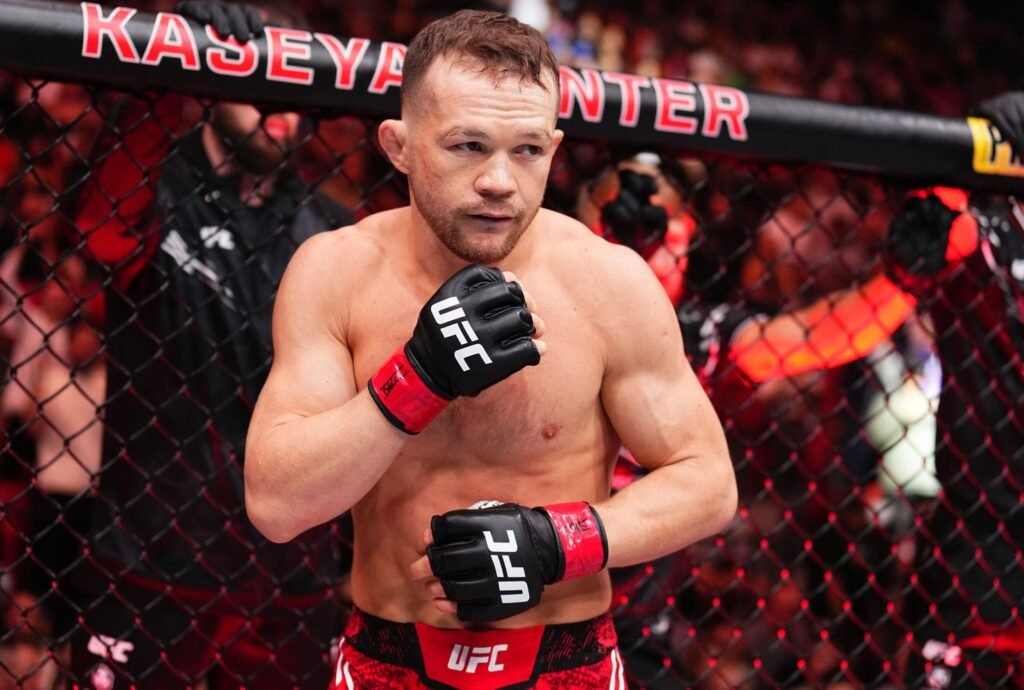
Petr Yan Adversity, Controversies, and Reinvention
Petr Yan has experienced difficult periods, including controversial outcomes and setbacks. However, these phases revealed his resilience. Instead of collapsing under adversity, he refined his approach:
- improved discipline,
- extended tactical study,
- enhanced defensive detail,
- greater emphasis on round-by-round scoring awareness.
This reinvention phase maintains his status as a perennial elite contender.
Petr Yan Legacy, Influence, and the Evolution of the Modern Bantamweight Striker
Petr Yan’s legacy is not limited to belts; it lies in how he redefined bantamweight striking.
11.1 Technical Legacy
He elevated the standard for boxing-based striking in MMA. His influence inspires fighters to develop:
- layers of defense,
- high IQ shot selection,
- cage pressure mechanics.
11.2 Psychological Legacy
Yan represents a mentally grounded fighter whose focus and discipline offer a blueprint for young athletes.
11.3 Cultural Legacy
He contributed to the rise of Russian athletes globally, helping shape modern perceptions of Russian MMA training systems.
Conclusion
Petr Yan stands as one of the most technically complete athletes in modern mixed martial arts. His journey from Siberia to world championship level reflects discipline, adaptability, and the relentless pursuit of excellence. What defines Yan is not brute force but structure. Not recklessness but control. Not merely aggression but intelligent pressure. He fights with the mind of a strategist and the precision of a craftsman.
His legacy extends beyond victories or belts. It lies in his demonstration that fundamentals, when sharpened with obsession, can surpass even the most athletic opponents. Petr Yan represents the modern MMA ideal: a fighter who blends skill, intelligence, and resilience into a complete architecture capable of thriving under the sport’s highest demands.Petr Yan’s rise from the modest surroundings of Dudinka to the pinnacle of the UFC bantamweight division is a story shaped by discipline, strategic intelligence, and an uncommon ability to adapt under pressure. His journey is not linear, and that is precisely what makes it compelling: he is a fighter forged not just by victories, but by adversity, controversy, and the constant pursuit of refinement.
What ultimately defines Yan is not only the precision of his boxing or the tenacity of his pace, but the mental architecture behind his craft. He approaches mixed martial arts as both a science and a vocation, blending the technical fundamentals of traditional striking with the modern demands of a highly competitive global sport. His fights reveal a deep understanding of rhythm, distance, and incremental advantage—an approach that relies on reading opponents, neutralizing strengths, and forcing them into uncomfortable terrain.